Bagyo season: what to stock before the signal goes up
PAGASA expects two to three cyclones in September alone. A study of 300,000 stores found sari-sari sales rose 27% during and after six typhoons. Here is what actually sold, and the shelf walk to do before the rain starts.
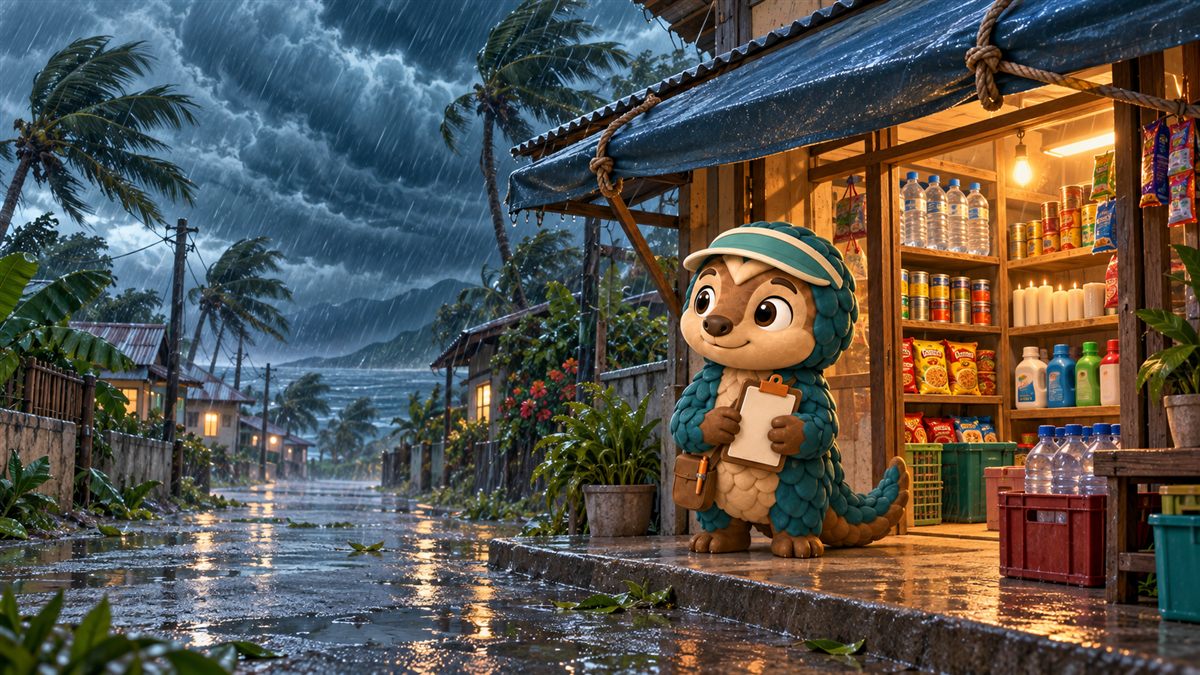
When a storm signal goes up, the tindahan becomes the only shop open on the street. That is not a figure of speech, and there is now data on exactly what people come in and buy.
How many storms are left this year
PAGASA's outlook, issued 22 April 2026, put the monthly count at two to three tropical cyclones in September and one to two in October. Its later outlook of 22 June gave six to nine for July through September and five to eight for the final quarter.
The bureau also noted something worth taking seriously: fewer storms are expected in the back half of 2026, but the ones that do form may intensify into typhoons or even super typhoons. A quiet season is not a mild season.
So: roughly half a dozen more chances of a signal between now and New Year.
What people actually buy when a storm hits
Packworks, which runs a platform used by more than 300,000 sari-sari stores, looked at seven provinces hit by six powerful typhoons in late 2024: Batangas, Cagayan, Isabela, Albay, Camarines Norte, Camarines Sur and Catanduanes. It published the results on 10 September 2025.
| What they measured | Change |
|---|---|
| Average daily gross merchandise value | up 27% |
| Number of transactions | up 50% |
| Bicol region, during the storms | up 50% |
| Bicol region, after the storms | a further 26% |
| Camarines Norte, steepest of all | up 105% |
Transactions rose faster than value, which tells you the shape of it: more people, buying smaller. Tingi, not packs. Single sachets and single sticks, bought by people who cannot get to a supermarket and would not buy a whole box anyway.
The categories that carried it:
| Category | Rise |
|---|---|
| Gin | median 14% across all seven provinces |
| Cigarettes | 12% across six provinces |
| Powdered coffee | 10% across six provinces |
| Detergent | the top-selling item in five provinces during recovery |
Detergent is the one that surprises people, and it should not. After floodwater goes down, everything in the house has to be washed, and nobody has a working washing machine or a supermarket to get to.
The stock list
Grouped by why, not by aisle.
Because the power is out
- Candles. Also on the DTI basic necessities list, so the suggested price is published and customers know it.
- Batteries, especially AA and D, for flashlights and radios.
- Matches or lighters.
- Charged powerbanks if you rent them out. Charge them before, not during.
Because the stove still works but the market does not
- Canned sardines, the plain tomato-sauce kind. ₱23 to ₱27 a can on the shelf right now.
- Canned meat: corned beef, karne norte, beef loaf.
- Instant noodles, both the ₱9 bags and the pancit canton.
- Rice, in the small quantities people actually buy in an emergency.
- Coffee sachets. The data says coffee, so stock coffee.
Because the water is out or unsafe
- Bottled and purified water. This runs out first and is the hardest to restock mid-storm.
Because the clean-up comes after
- Detergent powder in sachets and bars.
- Dishwashing liquid.
- Bleach.
Because people are stuck at home
- Cigarettes, if you carry them.
- Gin, if you carry it.
- Biscuits and crackers that keep.
For you, not for sale
- Cash on hand in small denominations. When the signal is up, GCash cash-in is useless to a customer who needs coins, and you cannot make change from an app.
- Your utang list, written somewhere that survives a wet week. A notebook in a flooded store is a notebook you cannot read.
The shelf walk to do now, not later
The mistake is stocking up when the storm is already named. By then the wholesaler is out of candles too.
Do one shelf walk this week and mark anything on the list above as Low rather than waiting for it to go Out. That single change moves the item onto your buy list a week early, which is the whole point. You go on your normal supplier run, buy a little deeper on those lines, and you are ready without tying up money in a panic.
In TindaJuan the shelf walk is the three buttons, and everything you mark Low or Out lands on the buy list grouped by supplier with an estimated total. Walk the store once, and the list writes itself. If you track some items by count, a case of water or sardines will drop onto the list on its own when it runs down.
Two more practical notes:
Do not over-stock the perishable. The lesson from the Packworks data is that people buy more small things, not that they buy everything. Sachets, cans and dry goods keep. A double order of bread does not.
Sell at your normal price. Raising prices during a calamity is both reportable under the price act and the fastest way to lose the customers who will still be on your street in December. The stores that came out of those seven provinces ahead did it on volume, not on markup.
The short version
- PAGASA expects two to three cyclones in September and one to two in October, with five to eight for the final quarter. Fewer storms, but possibly stronger ones.
- In seven typhoon-hit provinces, sari-sari sales rose 27% in value and 50% in transactions. More people, smaller baskets.
- Gin, cigarettes and powdered coffee rose most. Detergent was the top seller in five provinces during recovery.
- Stock for power out, stove on, water unsafe, and the clean-up after.
- Do the shelf walk this week, mark storm lines Low early, and buy them on your normal supplier run.
Sources. PAGASA tropical cyclone outlook of 22 April 2026 via GMA News, and the 22 June 2026 outlook for the remainder of the year. Packworks study of seven typhoon-affected provinces, published 10 September 2025, via Marketing-Interactive. Shelf prices from shopsuki.ph, captured September 18, 2026.