Dead stock: the money asleep on your bottom shelf
In a study of 300,000 micro-retailers, the biggest jump was not in bestsellers. Slow-moving products nearly doubled, from ₱7,361 to ₱14,429, once owners could see them. Here is how to find yours.
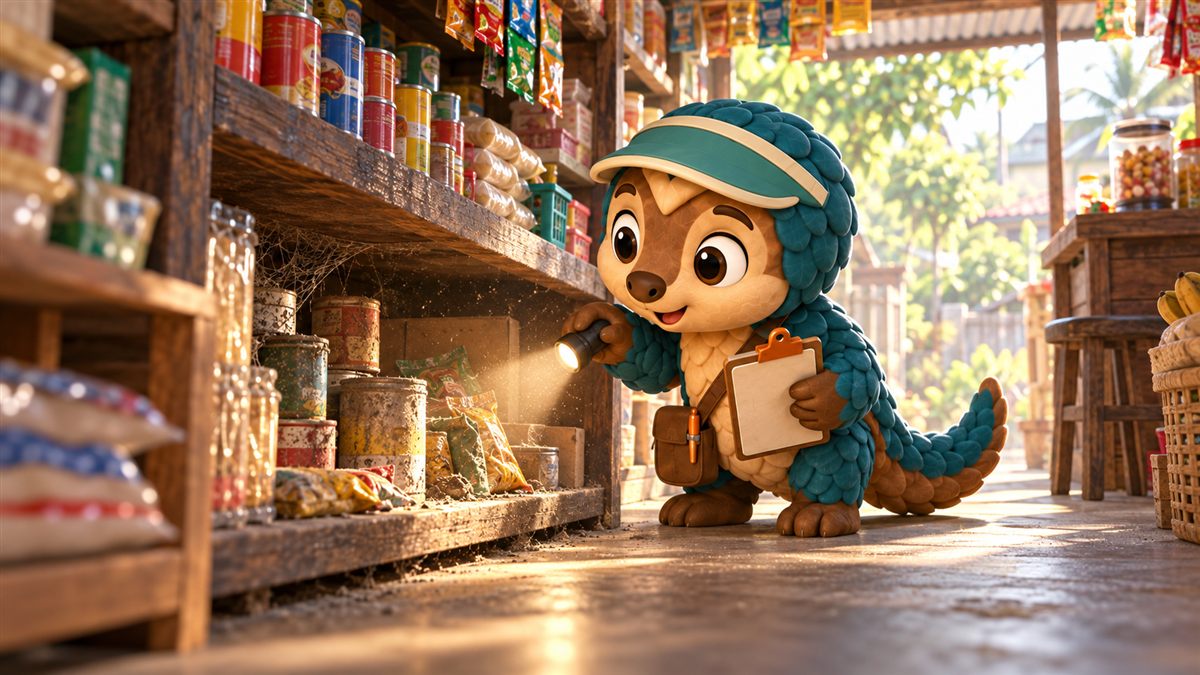
Every tindahan has them. The three cans at the back that have been there since summer. The shampoo variant nobody asked for twice. The box you opened once and then stopped noticing.
They are not costing you anything, which is exactly why they are easy to ignore. That is the wrong way round. They cost you the money you spent on them, and they have been costing it for months.
The finding that should annoy you
Packworks analysed more than a million monthly transactions across roughly 300,000 micro-retailers using its inventory tool, and published the results on 14 June 2026. The headline was a 29% rise in median total sales. But the headline is not the interesting part.
| What improved | Median change |
|---|---|
| Total sales | 29% |
| Top 50 products | 79% |
| Seasonal products | 47% |
| Slow-moving products | 96% |
| Number of transactions | 20% |
The slow movers nearly doubled, from ₱7,361.60 to ₱14,429 per store. Gross merchandise value per store went from ₱187,229 to ₱335,818.
Read that again, because it is counter-intuitive. The largest single improvement was not in the bestsellers. It was in the stuff at the back that nobody was paying attention to.
Nothing magical happened to those products. They did not become more popular. What changed is that the owner could see them, and once you can see a slow mover you do something about it: move it to the front, cut the price, stop reordering it, or bundle it. Any of those beats leaving it where it is.
Two honest caveats. Those figures describe stores using Packworks' own platform, not this one, so treat the percentages as somebody else's result rather than a promise. And a median improvement across 300,000 stores says nothing about what your particular shop would do. What does transfer is the mechanism: attention is the active ingredient, not the software.
What a dead item actually costs
Say you have ₱1,500 spread across items that have not sold in three months. That feels like nothing. It is a few cans, a few sachets of the wrong variant, one product you were talked into.
Now price it properly. If that ₱1,500 were in your fast movers instead, turning say three times a month at a 30% margin:
- ₱1,500 × 30% = ₱450 per turn
- Three turns a month = ₱1,350 a month
- Over the three months it has been asleep = ₱4,050 not earned
You did not lose ₱1,500. You lost the ₱4,050 that ₱1,500 would have made if it had been doing its job. That is the real number, and it is why dead stock is worth an hour of your time rather than a shrug.
It gets worse with anything that expires. A can that goes out of date is the full ₱1,500 logic plus the cost of the can.
How to find yours in twenty minutes
You do not need software for the first pass. You need a walk and a pen.
1. Walk the shelf and look for dust. Literally. Dust is the cheapest inventory report ever invented. Anything you have to wipe has not moved.
2. Ask one question per item: when did I last sell this? If you cannot remember, that is the answer. Do not agonise. Write it on the list.
3. Check the dates. Anything expiring in the next two months goes on the front of the counter today at whatever price moves it. Getting ₱20 back on a ₱25 can is a far better outcome than getting nothing on the 30th.
4. Sort what is left into three piles.
| Pile | What to do |
|---|---|
| Sells slowly but does sell | Keep one, never reorder more than one |
| Nobody has asked for it twice | Discount it out. Bundle it with a fast mover if that is what it takes |
| Bought for one customer who stopped coming | Stop reordering. This is the most common one |
5. Write the rule down: do not reorder anything in pile two or three. The list is useless if the same box arrives again next month out of habit.
The discount part is where most owners hesitate, so be clear about the maths: selling at cost today is better than selling at full price never. A can you bought at ₱22 and sell at ₱22 gives you ₱22 back to spend on something that turns. A can you refuse to discount gives you nothing, forever, and takes up the shelf space too.
Doing the second pass with records
The dust test catches the obvious ones. It misses the item that sells once a month, which looks alive on the shelf and is quietly dead in the accounts.
That is what sales history is for. In TindaJuan, every sale you ring up builds that history, and the insights screen shows what moved over a period and what did not. The item list can be filtered and sorted so the ones at the bottom are visible instead of hidden behind the ones you think about every day. If you have not been recording sales, start with the twenty things you sell most often. That is enough to make the comparison useful within a month.
Three things to do this week
1. Do the dust walk. Twenty minutes, one pen. Write down every item you have to wipe.
2. Put everything expiring within two months on the counter at a price that moves it. Today, not next week.
3. Pick the single worst item and get rid of it. Discount, bundle, or give it to the family. Then do not reorder it. One item is enough to start; the habit is what matters, not the sweep.
The ber months make this urgent rather than optional. Your capital is about to be needed for depth on the things that actually sell. Every peso asleep on the bottom shelf between now and December is a peso not available for the quarter when your store is busiest.
The short version
- Across 300,000 micro-retailers, slow-moving products improved most of all, up 96% from ₱7,361 to ₱14,429, once owners could see them.
- Those are another platform's results, not a promise. The transferable part is that attention, not software, is what moves dead stock.
- ₱1,500 asleep for three months is not a ₱1,500 problem. It is roughly ₱4,050 of margin you never made.
- Dust is a free inventory report. Walk the shelf, check the dates, sort into three piles.
- Selling at cost today beats selling at full price never.
Sources. Packworks Store Insighting Project findings, published 14 June 2026, via SunStar. Checked 19 September 2026.